
Why Is My Check Engine Light On? Causes, Costs, and What to Do Next
Quick Answer: Your check engine light is on because the car's computer found a problem with the engine, fuel, or emissions system. The most common causes are a loose gas cap, a bad oxygen sensor, worn spark plugs, or an engine misfire. A solid light means get it checked soon. A flashing light means stop driving and get help right away.
What Is the Check Engine Light?
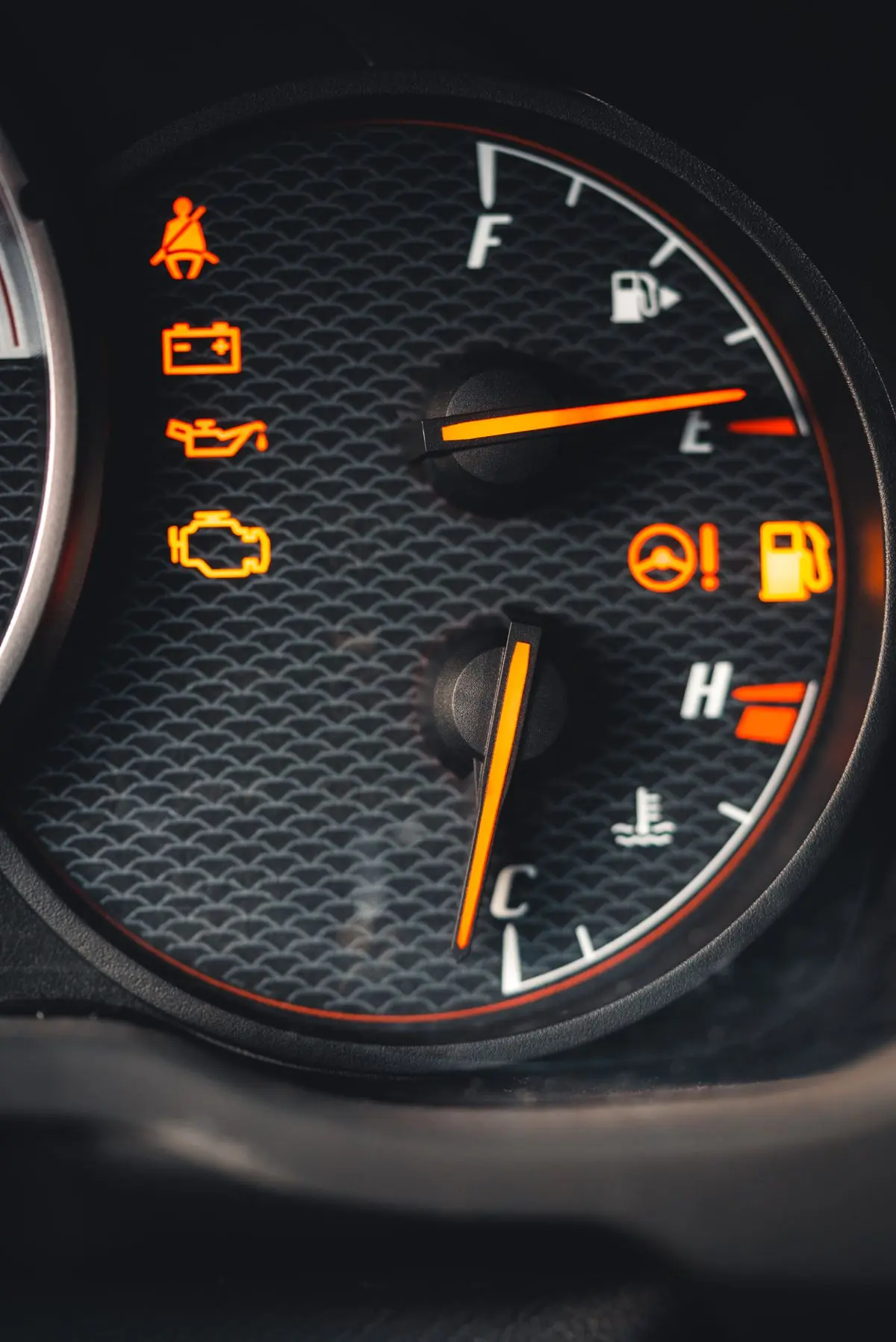
Your check engine light is on because the car's computer found a problem with the engine, fuel, or emissions system. The most common causes are a loose gas cap, a bad oxygen sensor, worn spark plugs, or an engine misfire. A solid light means get it checked soon, while a flashing light means stop driving right away. The light itself is a small engine outline on your dashboard, usually yellow or orange, and mechanics call it the malfunction indicator lamp, or MIL.
Since 1996, every car and light truck sold in the United States has an onboard diagnostics system called OBD-II. Sensors watch the engine, the fuel system, and the emissions system all the time. When a sensor sees a reading outside the normal range, the computer turns the light on and stores a trouble code.
The light is a symptom, not a diagnosis. It tells you something is wrong. It does not tell you exactly what is wrong. To find the real cause, you need to read the trouble code. If you want more detail, read our guide on what does check engine light mean. If other dashboard lights are on too, see our guide on car dashboard symbols and meanings.
Solid vs Flashing: How Urgent Is It?
The first thing to check is whether the light is solid or flashing.
| Light | What It Means | What to Do |
|---|---|---|
| Solid yellow or orange | A problem was found, but it is not an emergency | Book a check soon and drive gently |
| Flashing or blinking | An active engine misfire is happening now | Stop driving as soon as it is safe, get a tow |
| Solid red (rare) | A serious problem, often oil pressure or overheating | Stop the car at once |
A flashing light means the engine is misfiring badly. Raw fuel goes into the exhaust and can overheat the catalytic converter. A converter costs $800 to $2,500 to replace. A tow costs far less. If the light is solid, stay calm. You can usually drive to a shop. Drive gently and avoid hard acceleration. Do not take a long road trip until you know the cause.
Most Common Check Engine Light Causes
The Most Common Causes
Most check engine lights come from a short list of problems, from cheapest to most expensive.
1. Loose or damaged gas cap. The most common cause. The cap seals the fuel tank. If it is loose or cracked, fuel vapor escapes and the computer turns the light on. Tighten it until it clicks. Cost: $10 to $30.
2. Bad oxygen sensor. It measures oxygen in the exhaust and helps set the right fuel mix. When it fails, gas mileage drops. Cost: $100 to $300 total, including labor.
3. Worn spark plugs. Old plugs cause misfires, rough running, and hard starts. Most plugs last 30,000 to 100,000 miles. Cost: $80 to $200 for a set with labor.
4. Bad ignition coil. A bad coil causes a misfire in one cylinder. The car shakes and loses power. Cost: $150 to $400 per coil with labor.
5. Bad mass airflow sensor (MAF). It measures air coming into the engine. If it is dirty or broken, the fuel mix goes wrong. Sometimes it just needs cleaning with a $10 spray. Cost: $80 to $300 if it needs replacing.
6. Failing catalytic converter. It cleans the exhaust. It fails after long misfires or just from age. This is the most expensive common fix. Cost: $800 to $2,500.
7. Bad thermostat or coolant sensor. If either fails, the engine runs too cold or too hot. Cost: thermostat $150 to $350 installed, coolant sensor $100 to $200.
Check Engine Light Codes
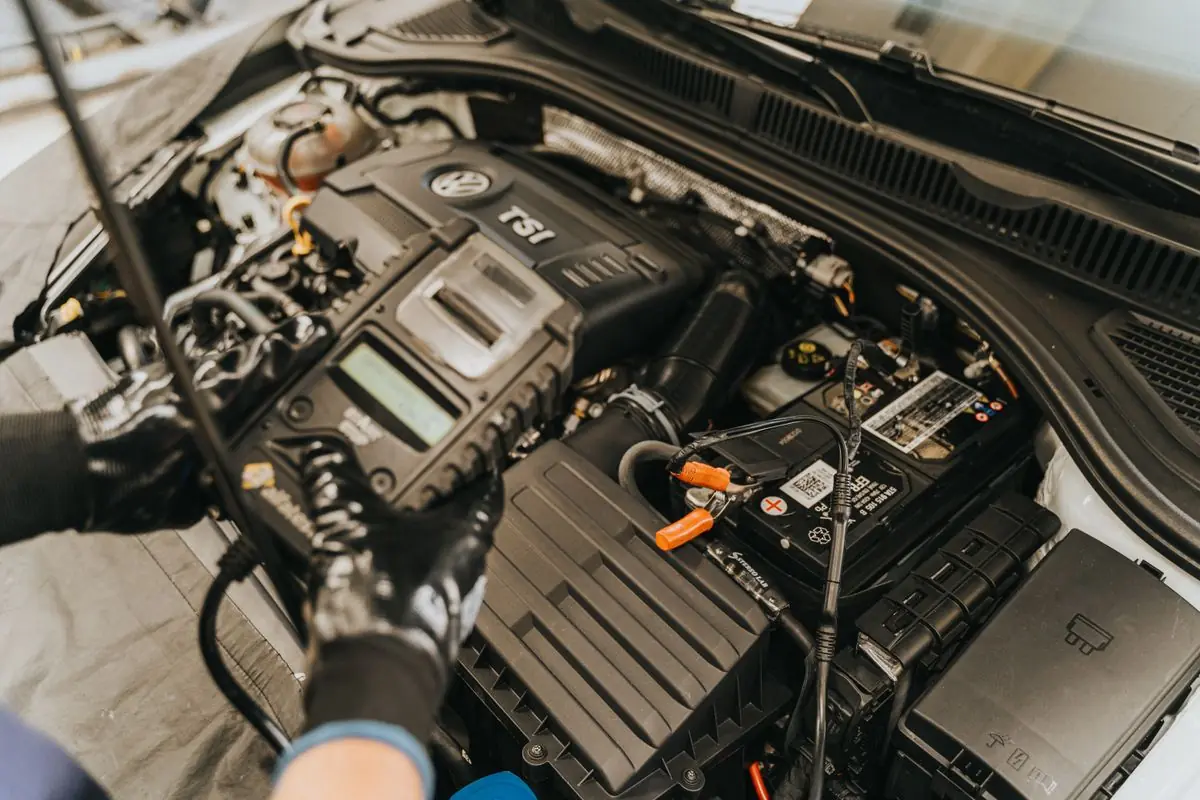
When the light comes on, the computer stores a diagnostic trouble code, or DTC. The code has five characters. The first letter tells you the system. P means powertrain. B means body. C means chassis. U means network.
| Code | Meaning | Urgency |
|---|---|---|
| P0457 | Loose gas cap or EVAP leak | Low, check the gas cap first |
| P0440 to P0457 | EVAP system leak | Low to medium |
| P0171 | Engine running too lean | Medium |
| P0300 | Random misfire in more than one cylinder | High, get it checked soon |
| P0301 to P0306 | Misfire in cylinder 1 to 6 | High, flashing means stop driving |
| P0420 | Catalytic converter efficiency low | Medium to high, costly fix |
A code points to a system, not a single part. For example, P0171 means the fuel mix is lean. The cause could be a vacuum leak, a dirty MAF sensor, or a weak fuel pump. A mechanic tests each part to find the real cause. Do not replace parts based on the code alone.
What to Do Right Now: 7 Steps
Step 1: Look at the light. Solid or flashing? If it is flashing, stop driving as soon as it is safe. Call for a tow. Step 2: Check the gas cap. Remove it and put it back on. Tighten it until it clicks. Step 3: Look for other symptoms. Is the car shaking? Losing power? Strange noises? Smoke? Note what you see. Step 4: Check the gauges. If the engine is overheating or the oil light is on, stop the car at once. Step 5: Drive gently if the light is solid. If the car runs normally, you can drive to a shop. Avoid hard acceleration. Step 6: Get the code read. Most auto parts stores read the code for free. Write it down. Step 7: Book a repair. Use the code and the cost table below. Do not ignore the light for weeks.
How to Get the Code Read for Free
You do not need to pay to find out why the light is on. AutoZone and O'Reilly Auto Parts both offer free code scanning in store. They plug a small scanner into the OBD-II port under your dashboard. You can also buy your own Bluetooth OBD-II scanner for $25 to $40. It sends the code to an app on your phone. The port is under the dashboard, near the steering wheel, on the driver side.
How Much Does It Cost to Fix?
| Problem | Typical Repair Cost |
|---|---|
| Loose or damaged gas cap | $10 to $30 |
| Oxygen sensor | $100 to $300 |
| Spark plugs (set with labor) | $80 to $200 |
| Ignition coil (each, with labor) | $150 to $400 |
| Mass airflow sensor | $80 to $300 (or $10 cleaner spray) |
| Thermostat | $150 to $350 installed |
| Coolant temperature sensor | $100 to $200 |
| Catalytic converter | $800 to $2,500 |
Before you pay for a big repair, check your warranty. Federal law covers major emissions parts for 8 years or 80,000 miles, including the catalytic converter. Check for recalls at nhtsa.gov/recalls. A recall repair is free at the dealer.
Can You Drive With the Light On?
It depends. A solid light with no other symptoms usually means you can drive a short distance to a shop. Drive gently and get it checked within a few days.
Do not drive if the light is flashing, the car is shaking or stalling, you hear loud knocking, the temperature gauge is in the red, the oil light is on, or you see smoke or smell burning.
If the light comes on during a road trip, find the nearest auto parts store for a free code scan. If the code is a loose gas cap, tighten it and keep driving. If the light is flashing, call for a tow. Cold weather can also trigger the light, since a weak battery struggles in the cold and seals shrink. Get the code read. If it keeps coming back, the problem is real.
Will It Pass an Emissions Test?
No, not while the light is on. In most states, the car fails the emissions test right away. Clearing the code does not fix this. It resets the readiness monitors, and you must drive normally for 50 to 100 miles before they are ready. Fix the real problem first, drive normally for a few days, then go for the test.
Safety Note
A check engine light is a warning, not a death sentence. But a flashing light is serious. If the light flashes, stop driving as soon as it is safe. Pull over, turn the engine off, and call for help. Driving with an active misfire can destroy the catalytic converter and cost $800 to $2,500. If you are not sure how urgent the problem is, call a mechanic and describe the symptoms.
Frequently Asked Questions
Why is my check engine light on but the car runs fine? The most common reason is a loose gas cap or a small EVAP leak. Tighten the gas cap first. If the light stays on, get the code read for free.
What does a flashing check engine light mean? It means the engine is misfiring right now. Raw fuel is going into the exhaust and can overheat the catalytic converter. Stop driving and get a tow.
Can a loose gas cap cause the check engine light? Yes. It is the most common cause. If the cap is loose or cracked, fuel vapor escapes and the computer sets code P0457. Tighten it until it clicks.
How much does it cost to fix a check engine light? It depends on the cause. A gas cap costs $10 to $30. An oxygen sensor costs $100 to $300. A catalytic converter costs $800 to $2,500. Get the code read first.
Will the check engine light go off by itself? Sometimes. If the problem was a loose gas cap and you tightened it, the light may go off after a few drives. A bad sensor or misfire will keep the light on until fixed.
Can I pass an emissions test with the check engine light on? No. The car fails right away. Fix the problem, then drive 50 to 100 miles so the monitors are ready. Only then will the car pass.
The Bottom Line
A check engine light is your car asking for help. Read the code, check the gas cap, and act on what you find. Small fixes now prevent big bills later. To keep your car in good shape, learn how to check oil and add it to your regular routine.