
How to Check Transmission Fluid in 8 Easy Steps
Quick Answer: To check transmission fluid, drive 10 to 15 minutes, park on flat ground, and leave the engine running in Park. Pull the dipstick, wipe it clean, reinsert it, and pull it out again. The fluid should sit between the low and full marks and look red or pink. Dark brown fluid or a burnt smell means service is due.
Why Checking Transmission Fluid Matters
To check transmission fluid, drive 10 to 15 minutes, park on flat ground, and leave the engine running in Park. Pull the dipstick, wipe it clean, reinsert it, and pull it out again. Healthy fluid sits between the low and full marks and looks red or pink. Checking matters because the fluid lubricates the moving parts, cools the transmission, and helps the gears shift smoothly, and when it is low or dirty the transmission wears out fast.
A transmission rebuild costs $1,800 to $3,500. A full replacement often costs more than $5,000. A fluid check costs nothing and takes five minutes. It can catch a small leak before it becomes a big repair.
Unlike engine oil, transmission fluid does not get used up. If the level is low, there is almost always a leak. Checking the fluid color also tells you when a fluid change is due, before the transmission starts slipping. If you can check your engine oil, you can check your transmission fluid. Our guide on how to check oil shows the same dipstick method.
How Often Should You Check It?
Check the fluid every 30,000 to 60,000 miles, or once a year, whichever comes first. Check it more often if your car is older, if you tow a trailer, or if you drive in heavy traffic every day.
A good habit is to check it once a month, at the same time you check your engine oil and tire pressure. A monthly check catches leaks early, when they are cheap to fix. Change the fluid every 30,000 to 60,000 miles. If it looks dark or smells burnt, change it sooner. For the full service steps, read our guide on how to change transmission fluid.
What You Need
You need a clean, lint-free white rag or paper towel (white shows the fluid color best), your owner's manual, gloves, and a small funnel with the correct fluid, only if you need to top up.
That is all. No tools are needed for a dipstick check. If your car has a sealed transmission with no dipstick, you will need more equipment. See the sealed transmission section below.
Step-by-Step Guide
Follow these steps in order. The whole check takes about five minutes.
Step 1: Warm up the transmission. Drive the car for 10 to 15 minutes. Warm fluid gives a true reading. A short drive warms the fluid more evenly than idling.
Step 2: Park on flat ground. Park on a level surface. Set the parking brake. A slope gives a false reading.
Step 3: Leave the engine running in Park. For most cars, the engine must be running and the car must be in Park. Some Honda and Acura models say to check with the engine off and the fluid warm. Always follow your owner's manual.
Step 4: Shift through all the gears. With your foot on the brake, shift slowly through all gears, including reverse. Then put the car back in Park. This moves fluid through the whole transmission.
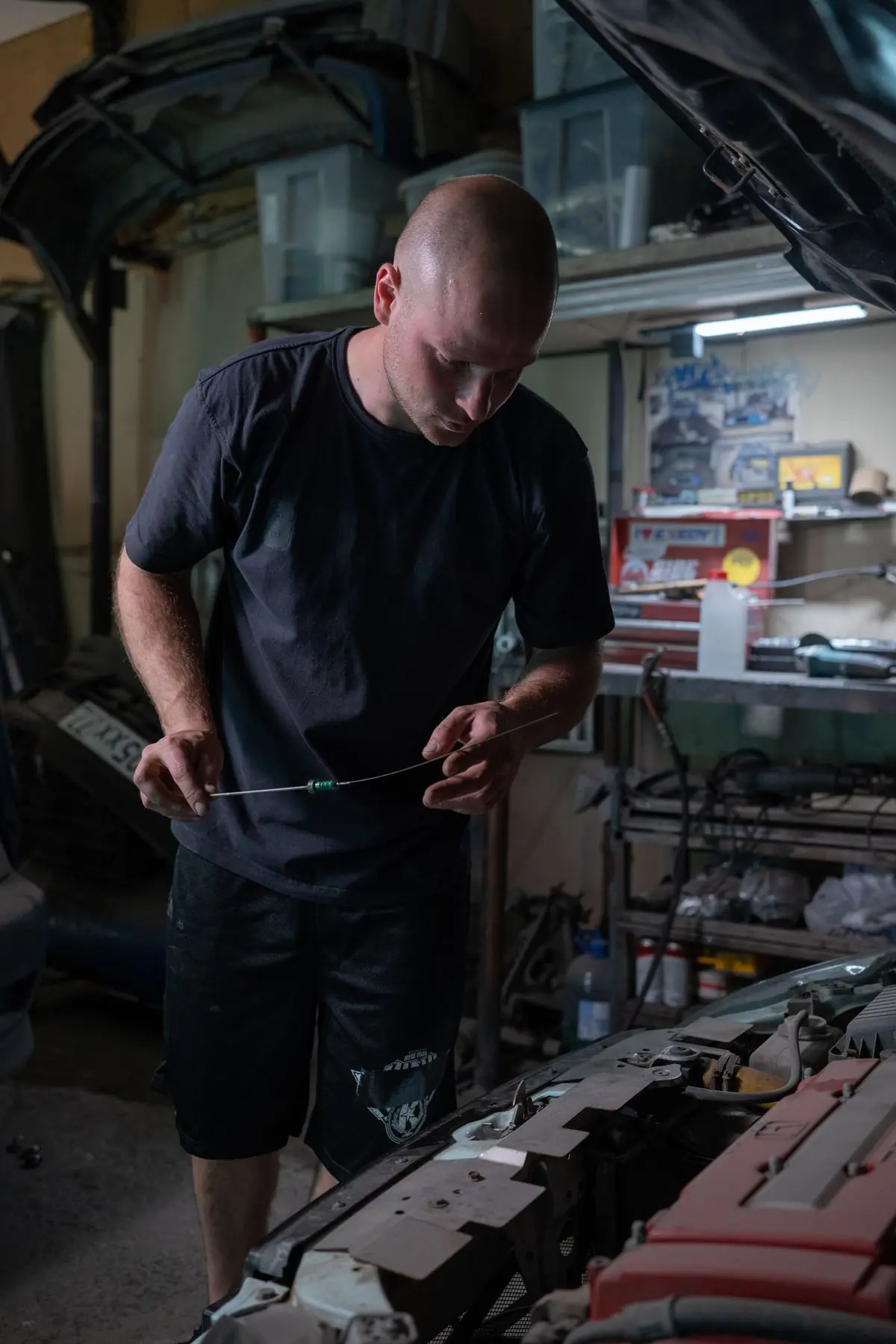
Step 5: Find the transmission dipstick. Open the hood. Look for a handle that is usually red, pink, or yellow, labeled TRANS or ATF. It sits near the back of the engine. Do not confuse it with the engine oil dipstick, which is usually black or orange. If you cannot find it, your car may have a sealed transmission.
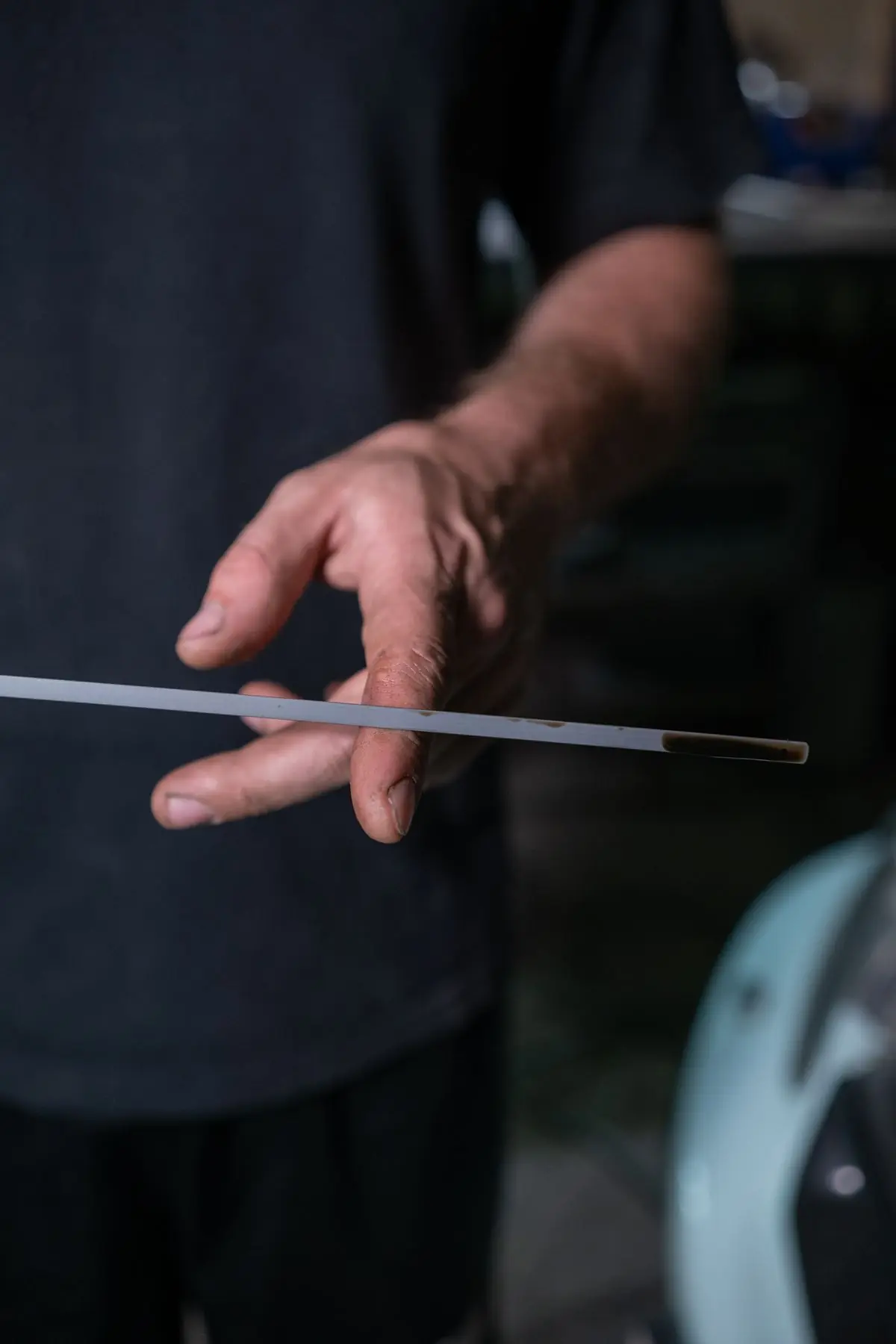
Step 6: Pull, wipe, reinsert, and read. Pull the dipstick out. Wipe it clean with the white rag. Push it all the way back in. Pull it out again. The fluid should sit between the MIN and MAX marks, or between the COLD and HOT marks. The gap between low and full is about half a quart.
Step 7: Check the color and smell. Smear a little fluid on the white rag. Look at the color. Smell it. Healthy fluid is red or pink and smells slightly sweet or neutral. Use the color chart below.
Step 8: Push the dipstick back in. Push it all the way back into the tube. Close the hood. Write down what you found, especially if the fluid was dark or low.
Transmission Fluid Color Chart
Transmission Fluid Color Chart
The transmission fluid color tells you the health of your transmission.
| Fluid Color | What It Means | What to Do |
|---|---|---|
| Bright red or light pink, clear | Fresh, healthy fluid | Nothing, check again next month |
| Dark red to light brown | Normal aging | Plan a fluid change soon |
| Light brown or caramel | Fluid is oxidizing | Change the fluid soon |
| Dark brown to black | Severely worn fluid | Change the fluid now |
| Milky pink, like a strawberry milkshake | Coolant is mixing into the fluid | Stop driving, tow the car to a shop |
| Fluid with metal bits or debris | Internal parts are wearing out | See a professional right away |
Milky pink fluid is the most serious result. It means coolant is leaking into the transmission. Coolant destroys the parts inside. Do not drive the car. Have it towed to a shop. Driving even a short distance can turn a repair into a full replacement.
What Does Healthy Fluid Smell Like?
Smell matters as much as color. Healthy fluid smells slightly sweet or almost neutral. It should not smell strong.
Burnt fluid smells like burnt toast. That smell means the transmission has been overheating. The fluid has broken down and cannot protect the parts anymore. Change it soon.
A foul or sour smell means contamination. Something other than fluid is in the system. Get it checked by a professional. If the fluid is dark and smells burnt, do not just top it up. The old fluid needs to be changed.
Low Transmission Fluid Symptoms
Low fluid almost always means a leak. Transmissions do not burn fluid like engines burn oil. Watch for these low transmission fluid symptoms:
- Slipping gears. The engine revs up, but the car does not speed up.
- Delayed shifting. You shift into drive or reverse, and nothing happens for a few seconds.
- Rough or hard shifts. The car jerks or clunks when it changes gears.
- Overheating. The transmission temperature warning comes on.
- Strange noises. Whining, humming, or buzzing from the transmission.
- Fluid puddles. Red or pink fluid under the car, usually near the middle.
- Warning light. If other lights are on too, read our guide on car dashboard symbols and meanings.
If you see two or more of these signs, check the fluid right away. Top it up only as a short term fix. Then find and fix the leak. A small leak today becomes a dead transmission tomorrow.
How to Check a Sealed Transmission
Many newer cars have sealed transmissions with no dipstick. BMW, Mercedes, Audi, Toyota, Ford, Chevy, Hyundai, Kia, Subaru, Nissan, and Honda all sell models without one. This is normal on modern cars.
On a sealed transmission, the level is checked from a fill plug under the car. The fluid must be at a specific temperature, often 95 to 113 degrees Fahrenheit. The car must be level, and a scan tool is often needed to read the temperature.
The basic process is to lift the car level, warm the transmission, remove the fill plug, and see if fluid trickles out. If none comes out, the level is low. Add fluid with a transfer pump until it trickles out, then reinstall the plug. This job needs a lift, a scan tool, and the right pump. If you are not sure, let a shop do it. A mistake can damage the transmission.
How to Check Manual Transmission Fluid
Manual transmissions do not have a dipstick either. They use gear oil, not automatic transmission fluid. The common gear oil is 75W-90.
Lift the car safely and make it level. Find the fill plug on the side of the transmission case. It is usually a bolt between 17 and 24 mm. Remove the plug. The fluid should be level with the bottom of the fill hole. Put your finger in the hole. You should feel fluid just below the edge. If it is low, add gear oil with a pump until it reaches the hole. Reinstall the plug and torque it to 25 to 35 ft-lb.
Manual fluid needs changing every 30,000 to 50,000 miles. If shifts feel rough or grind, the fluid may be old or low.
What to Do If the Fluid Is Low or Dirty
If the fluid is low but the color is good: Top it up with the correct fluid type for your car, such as Dexron VI, Mercon V, Toyota WS, or Honda ATF-DW1. Never mix different specs. Add small amounts. The gap between low and full is about half a quart. Then find the leak and fix it soon.
If the fluid is dark brown or black: The fluid is worn out. It needs a change. A drain and fill replaces 30 to 50 percent of the fluid. Do not flush a high mileage transmission with unknown history. A flush can cause slipping.
If the fluid is milky pink: Stop driving. Coolant is mixing into the transmission. Have the car towed to a shop. Do not try to fix it by topping up.
If the fluid has metal bits: Metal bits mean internal parts are wearing out. This needs a professional. Do not keep driving. Get the transmission inspected.
Safety Note
Transmission fluid is hot after driving and can burn your skin. Wear gloves when you handle the dipstick. Keep your hands and clothes away from moving parts under the hood, such as the fan and belts. Never work under a car held up by a jack alone. Always use jack stands. If you are not sure about any step, stop and ask a professional for help.
Frequently Asked Questions
How often should you check transmission fluid? Check it every 30,000 to 60,000 miles, or once a year. A monthly check is a good habit. It catches leaks early.
What color should transmission fluid be? Fresh fluid is bright red or light pink and clear. Dark brown or black means it needs changing. Milky pink means coolant is mixing in, so stop driving and tow the car.
Can I check transmission fluid when the engine is cold? You can, but the reading will be low. Warm fluid gives a true reading. Drive for 10 to 15 minutes first. Some Honda and Acura models say to check with the engine off, so follow your manual.
What happens if transmission fluid is low? The transmission slips, shifts rough, overheats, and wears out fast. Low fluid almost always means a leak. Top it up only as a short term fix, then fix the leak.
Do all cars have a transmission dipstick? No. Many newer cars have sealed transmissions with no dipstick. These need a shop check from a fill plug under the car.
Can I mix different brands of transmission fluid? Mixing brands of the same spec is usually fine for a top-up. Mixing different specs, such as Dexron VI and Toyota WS, is not safe. Use the spec in your manual.
The Bottom Line
Checking your transmission fluid takes five minutes and costs nothing. Make it a monthly habit, along with checking your oil and tire pressure. It is the cheapest way to protect one of the most expensive parts of your car. If the fluid looks dark or the level is low, act on it now. A small fix today can save you a $5,000 replacement tomorrow.